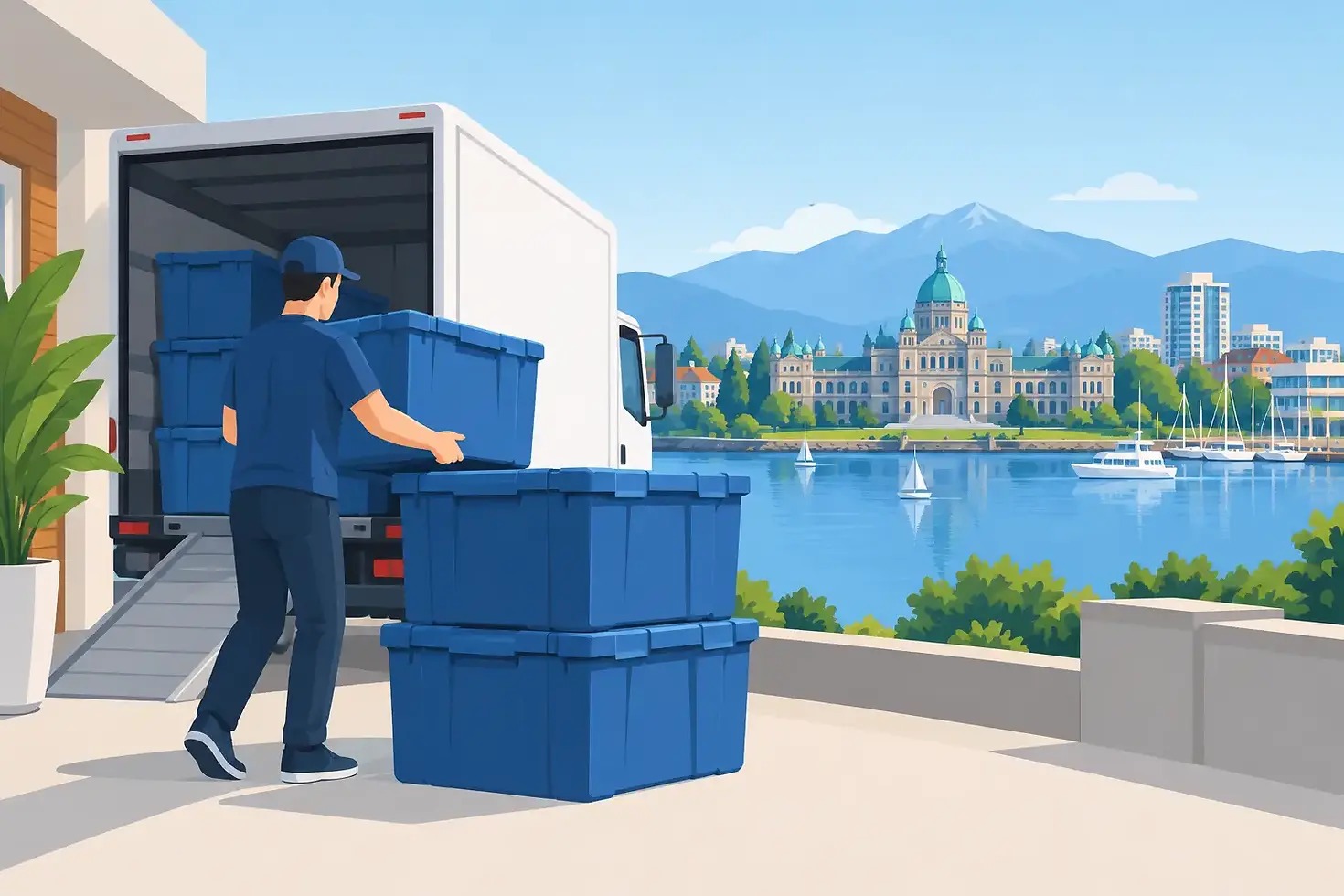
Tote Rental Services in Victoria, BC That Simplify Moves

A move can start to feel difficult before the first drawer is packed. Finding enough cardboard boxes, taping their bottoms, carrying them home, and deciding where to put them afterward adds work to an already busy week. Tote rental services in Victoria, BC offer a simpler route: durable moving containers delivered to your door, ready to pack when you are.
For local renters, homeowners, students, and families, reusable plastic totes turn boxes into a managed part of the move rather than another supply run. You order the quantity you need, pack on your schedule, move your belongings, and arrange pickup when the job is done.
What tote rental services solve during a move
Cardboard works for some moves, especially when boxes are already available and the load is light. But it has familiar limits. It can soften in damp conditions, buckle when stacked, require tape and assembly, and leave a large pile of waste behind. A box that has been used a few times may also be less dependable precisely when you need it to hold books, dishes, or electronics.
Plastic moving totes are built for repeat use. Their rigid sides help protect belongings from crushing and impact, while fitted or interlocking lids help keep stacks stable during loading and transport. They are also water-resistant, which matters when a Victoria move meets a rainy day, a damp entryway, or a wet truck ramp.
The biggest advantage is often time. Instead of sourcing boxes from several places and building them one at a time, you receive a set of uniform containers ready for packing. When you are settling into a new home, pickup means there is no cardboard to flatten, store, recycle, or leave at the curb.
How tote rental services in Victoria, BC work
The process should make moving feel more organized, not add another complicated booking to your list. A well-run tote rental service follows a clear sequence: choose your containers, schedule delivery, pack and move, then schedule pickup.
Pick the right quantity
Start with the size of your home and how you live in it, not just the number of rooms. A minimalist one-bedroom apartment may need fewer totes than a two-bedroom home with children, hobby equipment, books, or a full kitchen. Closets, storage lockers, linen cupboards, and garage shelves are easy to overlook, so allow room for the items that are already out of sight.
A practical approach is to pack one representative area early. If one kitchen cupboard fills two totes, you will have a better sense of what the rest of the kitchen requires. It is usually easier to add a small buffer than to race around looking for last-minute cardboard boxes on moving day.
Order delivery around your real packing schedule
Packing nearly always takes longer than expected. Booking tote delivery a few days before the move gives you time to work through one room at a time, label clearly, and keep daily life functioning until the last possible moment.
Panda Moving Boxes delivers reusable plastic moving boxes to Greater Victoria customers, so your containers arrive where you need them rather than taking up space in your vehicle before the packing even begins. Delivery also makes a real difference for people moving from apartments with limited parking or for households managing children, work, and move coordination at the same time.
Pack, stack, and move with less guesswork
Uniform totes make loading more predictable. Because containers are designed to stack, you can build stable columns in a room, elevator, hallway, moving truck, or storage area. That consistency helps movers use vehicle space efficiently and gives you a clearer view of what has been packed.
Use labels on the lid or side of each tote, with the destination room first and a short contents note second. “Kitchen - everyday dishes” is more useful than “kitchen,” particularly on the first night in a new place. Keep essentials such as medications, chargers, keys, important documents, and a change of clothes separate from the main load.
Arrange pickup when you are finished
Once the totes are unpacked, the rental service collects them. That is the point where the difference from cardboard is most obvious. There are no boxes to break down and no uncertainty about whether your building, recycling day, or vehicle can handle the pile.
What makes a moving tote worth renting
Not every plastic bin is designed for a move. Household storage bins may have loose lids, awkward handles, uneven shapes, or thin walls that flex under weight. Rental totes intended for moving should be industrial-grade and modular, built to hold up through repeated loading, stacking, and transport.
Look for containers with secure lids and comfortable handles. Interlocking lids help stop stacks from shifting, while ergonomic handles make it easier to carry a full tote from room to room. The shape matters too. Straight-sided, consistent containers are easier to stack than mixed cardboard boxes that bow, crush, or leave unusable gaps in a truck.
Durability is not only about protecting the container. It protects what is inside. Books stay contained, pantry jars have more support, and linen stays cleaner than it might in an open or weakened box. For fragile items, use towels, clothing, packing paper, or other cushioning inside the tote. Plastic walls reduce outside pressure, but glass and ceramics still need space between them.
When reusable totes are the better choice
Tote rentals are especially useful for apartment moves, condo moves, local home moves, and any move where you want to pack gradually. They are also a strong fit for households with a lot of dense, heavy belongings. Books, tools, canned goods, and kitchenware can quickly overwhelm thin cardboard, whereas sturdy totes maintain their shape and are easier to stack safely.
They can be less ideal for a long-distance move where the rental provider cannot collect containers at the destination, or for oversized items that do not fit neatly inside a standard tote. Artwork, lamps, large appliances, and bulky sports equipment may need specialty protection or moving blankets. The practical answer is often a mix: reusable totes for most household contents and purpose-built protection for unusual items.
If you are placing belongings into long-term storage, confirm the storage facility's requirements and consider how frequently you will need access. Totes are excellent for an organized short-term transition, but a long storage period may call for a different plan depending on space, budget, and inventory needs.
Pack smarter with a consistent tote system
A uniform container system rewards a little preparation. Pack heavy items in smaller loads and avoid filling every tote to the top with books or canned food. Keep similar items together, but do not let a label become too broad. Separating “bathroom - daily use” from “bathroom - cleaning supplies” makes unpacking faster and reduces the chance of searching through several containers for one item.
Avoid mixing liquids with paper goods or electronics. Close bottles tightly, place them upright, and use a bag or towel as a secondary layer of protection. Even water-resistant totes cannot prevent damage caused by a leaking cleaning product inside the container.
It also helps to create an open-first group. A handful of clearly marked totes for bedding, towels, coffee supplies, basic cookware, toiletries, and children's essentials can make the first evening manageable. Move those totes last into the truck and first into the new home.
A lower-waste move without extra effort
Reusable moving totes are a practical way to reduce the single-use waste associated with moving. Instead of buying cardboard that may be used once and discarded, customers rent containers designed for hundreds of uses. The environmental benefit comes from the system itself: durable equipment stays in circulation, then returns to serve the next local move.
That does not mean every moving material disappears. Some fragile items still need paper, blankets, or specialty wrap. The goal is not perfection. It is removing one of the largest and most repetitive sources of moving waste while making the packing process easier at the same time.
A good moving plan leaves you with fewer loose ends when the keys change hands. Choose containers that arrive ready, pack each room with a clear label, and give yourself enough time to unpack before pickup. The best box is the one you do not have to hunt down, tape together, or figure out how to get rid of later.


Comments