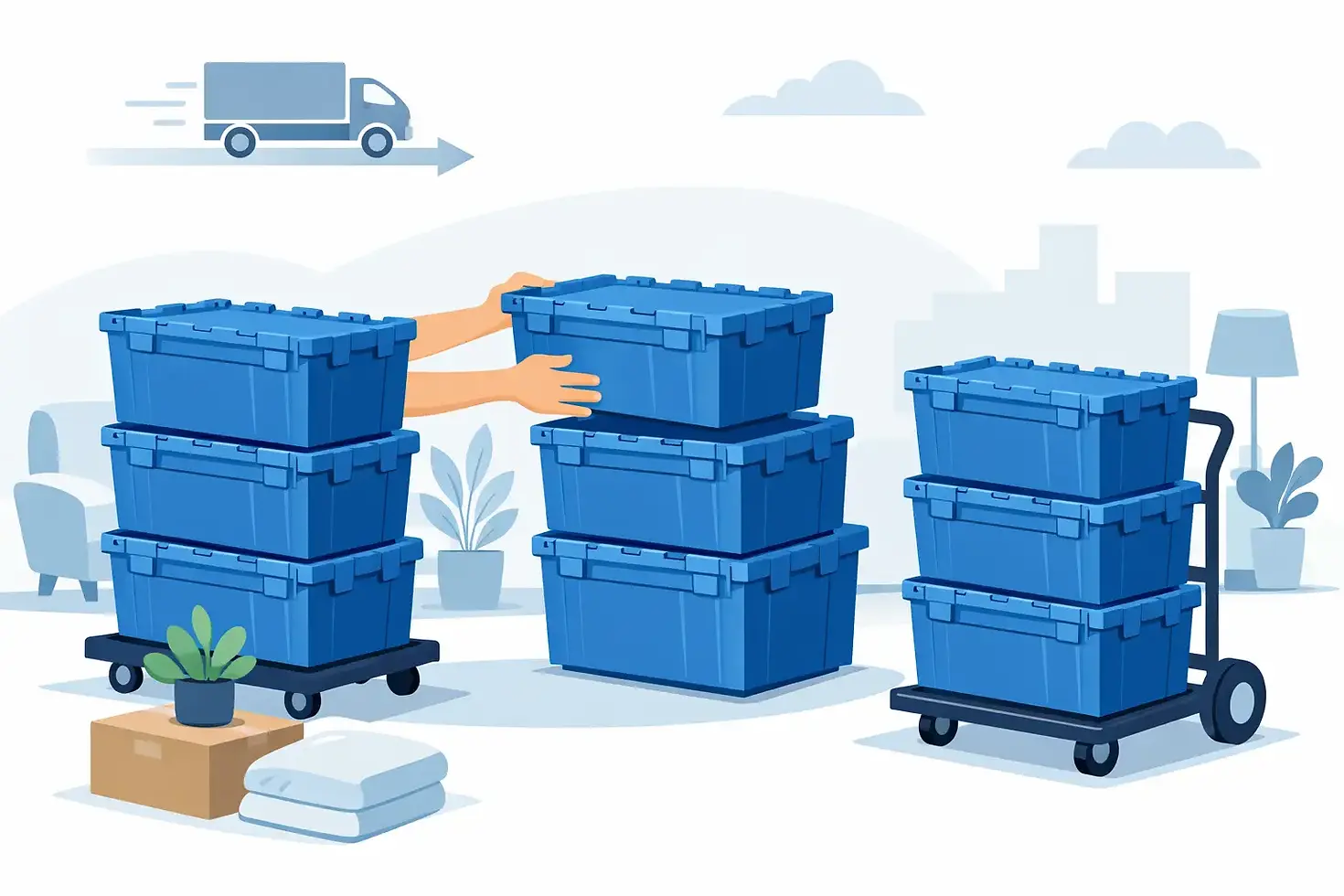
Stackable Moving Boxes for Moving Made Easier

A hallway full of half-built cardboard boxes is a poor way to start moving day. They tip, crush at the corners, need tape, and somehow multiply faster than you can fill them. Stackable moving boxes for moving give you a more orderly system: containers that arrive ready to pack, stack safely in a vehicle, and leave your home once the move is finished.
For a local move, the box itself affects more than packing. It influences how quickly you can get organized, how well your belongings travel, and how much cleanup waits for you at the other end. Plastic moving-box rentals are designed to remove a lot of the small frustrations that make a move feel bigger than it needs to be.
Why stackable moving boxes for moving are different
A stackable box is not simply a cardboard box made from a tougher material. The useful difference is in the system. Industrial-grade plastic containers are uniform in size, built with solid sides, and designed to sit securely on top of one another. That gives you a stable, predictable load whether you are packing a condo elevator, a family home, or a moving truck.
Cardboard can still have a place for an awkwardly shaped lamp, a large piece of art, or items that need a custom fit. But standard cardboard boxes vary in condition and size, and their strength depends heavily on how they were packed, taped, stored, and reused. A box with a softened bottom or crushed corner can quickly become the weak point in an otherwise careful move.
Plastic moving boxes hold their shape. Their rigid walls help protect contents from bumps and compression, while their lids close without a roll of packing tape. They are also resistant to water damage, which matters when boxes are carried across a wet driveway or left briefly near an open vehicle on a rainy Victoria day.
A moving box that works with your schedule
Moving rarely happens in one clean burst of activity. You may pack the kitchen over several evenings, keep everyday clothes accessible until the last minute, or spend a weekend sorting the storage locker before you touch the living room. Ready-to-use containers make that gradual process easier.
With a rental service such as Panda Moving Boxes, the containers are delivered to your door before the move. You can begin packing when it suits you, without a trip to find boxes, a pile of flat cartons to assemble, or a last-minute search for more tape. When you are settled, the empty boxes are picked up.
That delivery-and-pickup model is especially helpful when space is limited. Empty cardboard tends to take over a closet or corner while you wait to use it. After a move, used cardboard often stays in the new home longer than intended because recycling, giving it away, or breaking it down feels like another task on an already full list.
Reusable containers turn that final chore into a scheduled handoff. You unpack, set the boxes aside, and return them through pickup rather than finding room for them or figuring out where they should go next.
Safer stacking means a calmer moving day
The phrase "stackable" matters most when boxes are full. A secure stack uses vertical space efficiently and helps prevent shifting loads. Plastic boxes with interlocking lids are made to nest into place, so the stack is less likely to slide when a vehicle turns, stops, or travels over an uneven road.
This is useful for more than fragile items. Books, dishes, pantry goods, toys, paperwork, electronics, and folded clothing all benefit from containers that remain square and stable. You still need to pack thoughtfully - no box can protect a loose glass vase or an overfilled lid - but a rigid container gives your packing efforts a stronger foundation.
Ergonomic handles also make a practical difference. When you are carrying several loads up apartment stairs or from a driveway to a front door, a secure grip is easier on hands than cardboard cut-outs that bend under weight. Keep heavy boxes manageable, however. A durable container can carry a lot, but lifting safely is still the priority.
Pack by room, then label for the next task
Uniform boxes make a move easier to organize because every container follows the same basic rules. Start with one room at a time and avoid mixing unrelated items unless you have a clear reason. The goal is not to create a perfect inventory. It is to make unpacking less of a scavenger hunt.
Label the side of each box, not just the lid. Once boxes are stacked, side labels stay visible. Include the destination room and a short description such as "Kitchen - mugs and small appliances" or "Office - files." For boxes you need immediately, add a simple first-open note.
A few packing habits help make the most of stackable containers:
Put heavier items, such as books or canned goods, in the bottom and keep each box at a comfortable lifting weight.
Wrap breakable items individually and fill empty spaces so contents cannot shift during transport.
Keep valuables, medication, important documents, and daily essentials with you rather than in the moving load.
Use one clearly marked box for tools, chargers, cleaning supplies, and other items you will want as soon as you arrive.
The point is not to pack every box to the brim. A properly closed lid and a balanced load are more useful than squeezing in one extra item.
Less cardboard waste, without asking you to do more
A typical move can produce a surprising amount of cardboard, tape, plastic wrap, and damaged packing material. Some cardboard boxes can be recycled or used again, but many are weakened after one move, exposed to moisture, or simply left behind because they are inconvenient to store.
Reusable plastic moving boxes reduce the need for single-use boxes in the first place. The same containers can be used repeatedly - up to hundreds of moves when properly maintained - before they need to be replaced. That is a practical form of waste reduction because it is built into the move rather than added as another responsibility for the customer.
There is a trade-off. Plastic containers are not the right fit for every item, and rental availability needs to match your moving dates. If you are moving a large, unusually shaped object or shipping belongings long distance, you may need specialty packing materials as well. For the everyday contents of a home, though, reusable boxes are often the simpler choice.
How many boxes should you plan for?
The right quantity depends on how much you own, how much furniture you have, and whether you are packing a garage, storage locker, or home office in addition to your living space. A lightly furnished studio may need far fewer containers than a three-bedroom home with children, hobby gear, and years of stored items.
Think in categories rather than rooms alone. Kitchens and book collections tend to use more boxes than people expect. Bedrooms may use fewer boxes if clothing stays on hangers or goes into suitcases. Basements, sheds, and closets are often the wildcard, especially if they have not been sorted recently.
Give yourself a little buffer. Running out of boxes on the final night creates exactly the pressure a managed moving system is meant to avoid. If you pack early, you will also see where the volume is building and can adjust before the vehicle arrives.
Make the handoff easy for movers and helpers
Whether you are hiring movers or asking friends for help, stable containers make loading more efficient. Keep packed boxes grouped by room, place heavier containers lower in each stack, and leave a clear path through your home. If a box contains fragile items, label it clearly, but do not rely on a label alone - pack it so it can handle normal movement.
At the new home, direct boxes to their destination rooms before they are opened. This saves you from relocating the same container several times and keeps main walkways clear. Unpack the essentials first, then return to the rest at a comfortable pace.
Moving is already a transition. Your packing system should make that transition feel more manageable, not give you more materials to buy, build, tape, flatten, and dispose of. Choose boxes that arrive ready for the work, protect what matters, and can be picked up when your new place starts to feel like home.


Comments