Moving Boxes Delivery and Pickup Made Simple

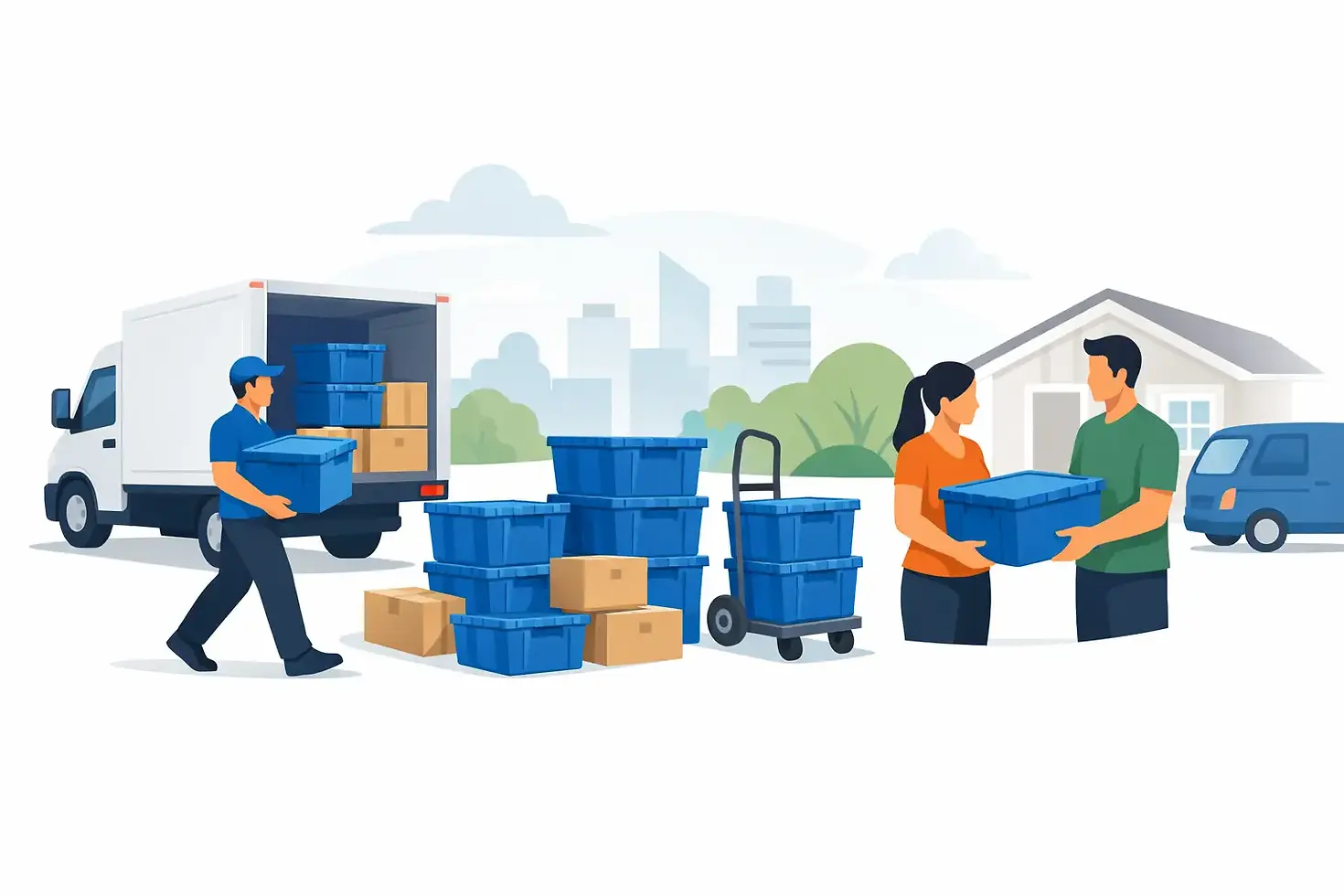
A move often starts with a cardboard-box problem: finding enough boxes, carrying them home, building them, taping the bottoms, then figuring out where all that flattened cardboard will go. Moving boxes delivery and pickup changes that part of the job. Instead of sourcing packaging yourself, durable reusable containers arrive at your door before packing begins and are collected after the move.
For local moves, that means fewer errands, less clutter in the hallway, and one less deadline competing for your attention. You still decide when to pack and how to organize each room, but the box system is already handled.
How moving boxes delivery and pickup works
The process is designed around the natural rhythm of a home move. First, choose the number of reusable moving boxes you need and schedule a delivery date that gives you enough time to pack. The boxes arrive ready to use - no assembly, tape, or guesswork about whether the bottom will hold.
Next, pack room by room, move the containers to your new home, and unpack at a pace that works for you. Once the boxes are empty, arrange pickup. The containers are collected so they can be cleaned, inspected, and used again for another move.
This three-stage approach matters because moving has enough moving parts already. A scheduled box service replaces several small tasks: buying materials, breaking down boxes, storing extras, and disposing of the rest. For many renters, families, students, and homeowners, removing those tasks creates more breathing room in the days around possession and move-out dates.
Delivery should happen before packing pressure starts
Book delivery early enough that packing is not compressed into one exhausting weekend. If you are moving from a one-bedroom apartment, a few days may be plenty. A larger household, a busy family schedule, or a move involving storage may call for a longer rental period.
When the containers arrive, place a stack in each area you plan to pack. Keep a small group near the kitchen and another near closets, bookshelves, or a home office. This makes it easier to fill boxes as you sort rather than creating one large packing pile that blocks your living space.
If you are coordinating movers, confirm the delivery window with enough time to have everything packed before moving day. Reusable boxes are particularly helpful when a professional crew is loading the truck because their uniform size and secure stacking make the load easier to organize.
Why reusable plastic boxes work differently
A moving box is not just a container. It has to protect belongings through packing, lifting, loading, transport, unloading, and unpacking. Cardboard can do the job, but it is vulnerable to moisture, crushed corners, weak tape, and uneven stacking - especially when it has been used before.
Industrial-grade plastic moving boxes are built for repeated handling. Their rigid sides resist impact and crushing, and their construction provides more dependable protection from water damage than standard cardboard. Interlocking lids help boxes stay closed and stacked during transport, while integrated handles give you a more secure place to grip when carrying a full load.
The modular shape is just as useful as the material. Boxes with consistent dimensions stack neatly in a room, elevator, vehicle, or moving truck. That reduces awkward gaps and the temptation to pile fragile items on top of an unstable box.
There is a practical trade-off, however. Plastic boxes are excellent for most household belongings, but very large, unusually shaped items may still need another solution. Lamps, artwork, oversized cookware, and furniture require their own protection and planning. Reusable boxes create a strong system for the bulk of your packing, not a substitute for careful handling of every item you own.
Pack to a comfortable carrying weight
Durable boxes can hold a lot, which makes it easy to overfill them. Keep dense items such as books, records, canned goods, and tools in smaller loads. Use larger volumes for lighter belongings like linens, clothing, toys, and pantry items.
A good test is simple: if you cannot lift the container comfortably with two hands, redistribute the weight before moving day. This protects your back, helps anyone assisting you, and keeps the move flowing when boxes need to travel up stairs or through narrow entryways.
For fragile items, wrap and cushion as you normally would, then fill empty space so contents cannot shift. The rigid outer box provides a reliable shell, but glasses, ceramics, and electronics still need internal protection.
A better packing plan for a faster move
The right containers make packing easier, but a simple plan makes them work even better. Begin with items you will not use before the move: off-season clothes, decorations, extra dishes, books, and rarely used hobby supplies. Leave daily essentials until last.
Label every box on more than one side. Include the room it belongs in and a short note about the contents, such as “Kitchen - baking tools” or “Bedroom - winter sweaters.” Avoid vague labels like “miscellaneous.” Specific labels speed up unloading and prevent the first night in a new home from becoming a hunt for phone chargers or coffee supplies.
Set aside one clearly marked essentials box for each household. It may include medications, toiletries, basic cleaning supplies, snacks, a change of clothes, chargers, important documents, and anything children or pets need immediately. Keep these boxes with you if possible instead of loading them deep into the truck.
In Greater Victoria, weather can also affect a move even when the forecast looks manageable. Reusable plastic containers are useful when carrying boxes between a home, vehicle, and apartment building in damp conditions. They do not make belongings waterproof once a lid is open, but they provide more protection against wet sidewalks, drips, and brief exposure than ordinary cardboard.
Pickup is part of finishing the move
The last box is often unpacked long after the moving truck has left. With cardboard, that can mean a growing stack of empty cartons in the garage, lobby, or recycling area. Some boxes can be reused, but many are worn out, wet, torn, or simply too bulky to keep.
With a moving-box rental, pickup is built into the process. Once you have unpacked, collect the empty containers in one accessible place and schedule their return. You do not need to flatten them, bundle them, or make multiple recycling trips.
Before pickup, check each box for small items that may have slipped into a corner. Remove old labels if applicable, make sure lids are closed, and keep the stack clear of locked doors or building access restrictions. If you live in a condo or apartment, confirm where the pickup driver can park and whether elevator or loading-zone arrangements are needed.
This is also where the environmental benefit becomes concrete. A reusable container can be used hundreds of times, replacing a long chain of single-use boxes. Panda Moving Boxes uses containers designed for up to 400 uses, so the value is not only in avoiding one recycling pile after one move. It is in choosing equipment that remains useful across many local households.
Choosing the right service window
The best rental period depends on your move, not just the size of your home. A short overlap between homes may require fast packing and a prompt pickup. If you are renovating, waiting for furniture, or moving in stages, extra time can prevent rushed unpacking.
Think through your calendar before booking. Consider possession dates, elevator reservations, help from friends or movers, cleaning days, work schedules, and whether you will need to empty a storage locker. It is usually easier to give yourself a little more time than to discover that packing and pickup are competing with an already full final day.
A reliable delivery-and-pickup service does more than replace cardboard. It gives your move a clear beginning and end: boxes arrive ready, protect what you pack, and leave when their job is done. Set your delivery date early, label with purpose, and give yourself enough time to unpack properly. That is a calmer way to start making a new place feel like home.


Comments