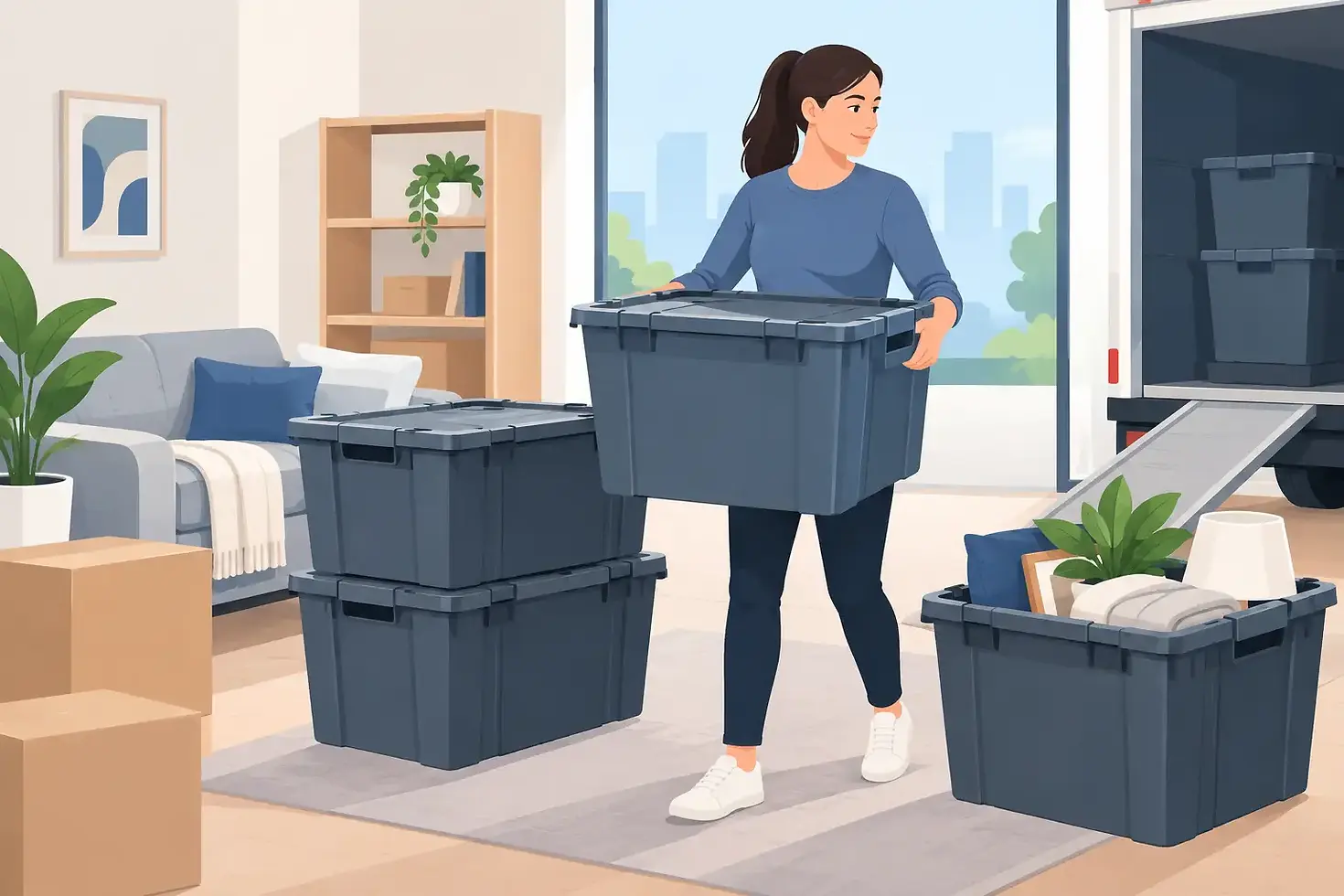
Moving Crates: A Better Way to Pack and Move

The hardest part of moving often starts before a single box is packed: finding enough cardboard, building it, buying tape, and hoping the bottom does not give out on the stairs. Moving crates replace that scramble with a ready-to-pack system. They arrive clean, stack securely, and stay intact through the trip from one home to the next.
For renters, homeowners, students, and families, that can mean less time managing packaging and more time managing the move itself. Reusable plastic crates are not the right choice for every item or every situation, but for the bulk of a local household move, they solve many of cardboard's most familiar problems.
Why moving crates change the packing process
Cardboard boxes are a one-time solution. They must be sourced, assembled, taped, labelled, carried carefully, then broken down or disposed of after the move. A reusable crate is built to arrive ready for use. Its solid sides, fitted lid, handles, and consistent shape turn packing into a more predictable task.
That consistency matters when your home is full of different-sized rooms and competing priorities. Instead of trying to fit belongings into whatever boxes you found, you can pack room by room in containers that stack together neatly. Books, pantry goods, toys, office supplies, linens, kitchen tools, and everyday clothing all travel more securely when the container beneath them will not bend or collapse.
Industrial-grade plastic also handles conditions that can make cardboard unreliable. A damp entryway, a rainy loading day, or a box set briefly on wet pavement can weaken cardboard quickly. Plastic crates resist water damage and are far less likely to crush under a properly stacked load. That does not make them indestructible, and fragile items still need wrapping, but it gives your move a stronger foundation.
The practical advantages of reusable moving crates
The best packing equipment should make the whole move easier, not just hold your things. Reusable crates do that in several ways at once.
First, they save setup time. There is no folding, taping, or reinforcing corners before you start. Open the crate, place items inside, close the lid, and move to the next one. When you are packing after work or between family commitments, removing those small repetitive tasks makes a noticeable difference.
Second, their modular shape improves how a vehicle is loaded. Containers with the same footprint stack more safely than a mix of soft, bulging cardboard boxes. The load is easier to organize, whether you are using your own vehicle for smaller trips or working with a local moving crew. Stackable crates can also help keep pathways clearer in your home while you prepare.
Third, ergonomic handles are easier to grip than cut-out cardboard handholds. A crate can still be heavy if it is filled with books, so sensible packing remains essential. Keep dense items in smaller loads, avoid overfilling, and use two people for anything that feels awkward. Good containers reduce risk, but they do not replace good lifting habits.
Finally, renting reusable containers avoids the post-move pile of flattened cardboard. Instead of finding room in the garage for boxes you may never use again, or making repeated recycling trips, you can have the crates collected when you are finished.
How to plan a move with moving crates
A smooth move starts with a realistic count. Walk through each room and estimate what needs to travel, not what you hope to sort later. Kitchens, bookshelves, children’s rooms, home offices, and storage closets often need more containers than expected. Give yourself enough crates to pack gradually rather than waiting for a stressful final weekend.
Choose a delivery date that gives you breathing room
Aim to have crates delivered several days before moving day. That gives you time to pack non-essential belongings first: seasonal clothing, décor, extra dishes, books, and rarely used appliances. Keep a few crates open for the final day, when bathroom items, bedding, chargers, and everyday kitchen supplies need to be packed.
For a Greater Victoria move, delivery and pickup can be especially useful when parking, elevator bookings, ferry schedules, or a narrow moving window are already adding pressure. Panda Moving Boxes works as a delivery-to-pickup service, so you do not need to add a trip to buy or return packaging to your list.
Pack one room at a time
Start with a simple label on the crate lid or side: destination room and a short description of contents. “Kitchen - baking supplies” is more useful than simply “kitchen.” If several people are packing, use a consistent system so everyone can find essentials quickly on the other end.
Place heavier items at the bottom and lighter items on top. Fill gaps with tea towels, clothing, packing paper, or other soft items to limit shifting. Plates, glasses, framed art, and electronics still need appropriate protection. Crates prevent the container from collapsing, but they cannot stop an unwrapped wine glass from knocking against another glass.
Avoid treating every crate as a place to put everything. Cleaning supplies should be packed upright and separated from food. Important documents, medication, jewellery, keys, and personal devices are usually best kept with you. A moving crate is excellent for household belongings, but some essentials deserve their own dedicated bag or box.
Load with stackability in mind
One advantage of standardized crates is that they are designed to stack. Use that advantage carefully. Close lids fully before stacking, keep the stack level, and avoid placing unstable furniture or loose items on top. Do not build towers so high that they become difficult to control while loading or unloading.
When the truck or vehicle is loaded, place crates close together to reduce movement. Use moving blankets, straps, and other equipment where needed, especially around furniture and larger items. Crates make the load more orderly, but the right moving method still depends on the vehicle, distance, weather, and who is doing the lifting.
Where crates work best, and where cardboard may still help
Reusable plastic crates are ideal for the high-volume, everyday contents of a home. They are particularly useful for dense or awkward household categories such as books, pantry items, cookware, files, toys, shoes, and folded clothing. Their secure stacking also helps when space is limited in a condo hallway, apartment elevator, garage, or moving truck.
There are times when cardboard remains useful. Very large, lightweight items such as lampshades, oversized artwork, or bulky specialty pieces may need purpose-built cartons. Clothing that you want to keep hanging may be better suited to a wardrobe box. If you are shipping items long-distance or storing them for an extended period, the best solution may depend on the storage environment and the requirements of the carrier.
This is not about declaring cardboard useless. It is about using a better tool for the largest part of a local move. For most household items, reusable crates offer more protection, more order, and less waste than a stack of single-use boxes.
A lower-waste move without extra work
Moving generates enough waste without adding dozens of disposable boxes, tape rolls, and damaged containers to the mix. Reusable crates are made for repeated use, which changes the equation. Rather than purchasing packaging for one move, you rent access to containers that can be used again and again.
That environmental benefit is practical, not performative. Fewer cardboard boxes to acquire means fewer boxes to store before moving day. Fewer damaged boxes means less repacking. Pickup after the move means less material left in your new home when you are trying to settle in.
A cleaner move is usually a calmer move. When your containers arrive ready, protect what you pack, stack safely, and leave again when the job is done, moving feels less like a cardboard project and more like a manageable plan.


Comments